Project description
The COMPacity project aims to establish a greenhouse gas-reducing composting process for organic waste in the Buffalo City metropolitan area. The focus is on constructing a production and demonstration facility for the circular economy-based recycling of organic waste and the production of high-quality, demand-driven substrate products in the Buffalo City metropolitan area.
The development of operational and business models, as well as tailored training and educational programs for regional educational institutions, combines technical expertise, capacity building, and practice-oriented, forward-looking learning. The results are continuously documented, translated into guidelines, and disseminated to enable transferability to other locations.
Even during the project’s implementation, this will lead to a reduction in greenhouse gas emissions of 920 tCO₂e, close material cycles through the recycling of 3,000 metric tons of organic waste, and strengthen an economically viable circular economy in the Eastern Cape.
Background
South Africa has set ambitious goals in the areas of climate protection and the circular economy; however, organic waste is still often landfilled or inadequately treated. This results in avoidable greenhouse gas emissions, while valuable resources for soil improvement in agriculture and horticulture remain untapped.
The Buffalo City municipal government also faces growing challenges due to limited landfill capacity, rising disposal costs, and illegal dumping.
A lack of demonstration projects, limited training capacity, and municipal investment and financing constraints are hindering the expansion of modern composting methods.
At the same time, the processing and material recovery of waste streams offer enormous potential for implementing the bioeconomy and establishing local value chains in the circular economy.

Impact
COMPacity will create tangible environmental, economic, and educational benefits by establishing a circular system for green waste management that enables the Buffalo City municipal government to divert organic waste from landfills, reduce greenhouse gas emissions, produce marketable compost- and substrate-based products, and strengthen its capacity to achieve municipal waste management and climate goals.
The project will:
1. establish a financially viable operating model for the recycling of organic waste,
2. promote the development of local circular economy value chains, and
3. create long-term employment opportunities in plant operations, maintenance, and product marketing.
SDGs
The institutional integration of the COMPacity teaching and learning concept into the regional educational landscape ensures the long-term transfer of knowledge and results and supports cross-regional entrepreneurship, practice-oriented training, and the creation of green jobs.
By promoting the recycling of organic waste and a resource-efficient circular economy, as well as by developing vocational, technical, and sustainability-related skills, the project makes a significant contribution to achieving SDG 12, “Responsible Consumption and Production,” and SDG 4, “Quality Education.”
Project objectives
The overarching goal of the COMPacity project is to establish a demonstration facility in Buffalo City where low-emission composting processes will be tested and practical expertise will be built among local stakeholders. By optimizing the biological treatment of organic waste, the project aims to reduce greenhouse gas emissions and lay the groundwork for a sustainable circular economy. In addition, scalable and economically viable composting models are being developed and tested that can contribute in the long term to improving soil fertility, strengthening climate resilience, and promoting the sustainable development of the region.
01

Processing of 1.500 t/a of green waste
The demonstration plant will process 1,500 metric tons of municipal green waste annually into 800 metric tons of high-quality substrate, thereby promoting material recovery and reducing the amount of organic waste sent to landfills.
04

Qualification of 40 trainers
Through a training-of-trainers program, 40 trainers will be certified in low-emission composting methods.
02
CO₂e reduction of 460 tCO₂e/a
Composting 1,500 metric tons of municipal green waste prevents approximately 460 metric tons of CO₂e in greenhouse gas emissions each year.
05
Training of 650 subject-specific students
Through an application-oriented teaching and learning program, 650 students in the fields of sustainability, agriculture, and public administration and business administration are being trained.
03

Improved climate resiliance across an area of 75 hectares
Through a mentoring program for smallholder farmers and the use of compost on farmland, soil structure, humus content, and soil life are being sustainably improved across an area of 75 hectares.
06

Development of a best-practices and transfer guide
Development of a practice-oriented best-practice and transfer guide on the transferability of low-emission composting processes and economically viable composting models to other municipalities and regions.
Participation formats
Regional experts, decision-makers, and business representatives are systematically involved in the implementation of the COMPacity project through various participatory formats. This allows the interests, needs, and technical expertise of the regional partners to be incorporated into the project work.
Iterative feedback processes make it possible to jointly discuss and evaluate the project results and ensure their long-term, needs-based integration into the region. The guidelines, standards, best-practice approaches, and teaching and learning concepts developed in this way provide local business associations and advisory centers, municipalities, and vocational training institutions with support in strengthening their organizational capacities and integrating approaches for low-greenhouse-gas organic waste management into their institutional processes and training activities.
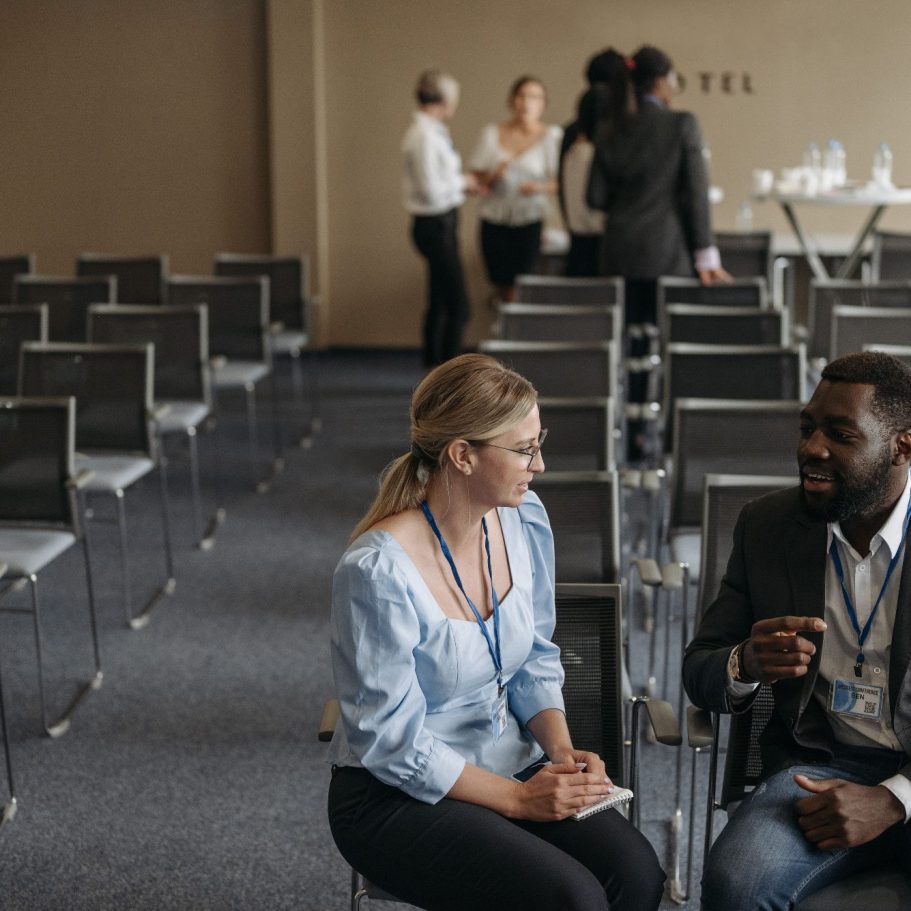
Innovation forums
The organization of two research and innovation forums will strengthen knowledge exchange and the involvement of relevant stakeholders.
To this end, experts and companies from the value chains of biowaste management, composting, landscaping, horticulture, and agriculture, as well as representatives from the fields of education, business, and public administration, local governments, and municipal councils from across the Eastern Cape region, will be actively involved.

Roundtables
A series of topic-specific roundtable discussions will promote technical dialogue, the validation of project results, and the exchange of experiences and best practices among the relevant stakeholders.
Based on the insights gained, a practical implementation guide and a framework for best practices will be developed to support local and regional decision-makers in planning and implementing circular waste management systems.

Workshops
Target-group-specific workshop formats designed to:
1. Establish the importance and potential of compost and soil health within the field of agricultural education and extension.
2. To equip students and young professionals with the necessary skills through application-oriented educational concepts and foster practical engagement,
3. To support local and regional decision-makers in the planning and implementation of circular waste management systems.